
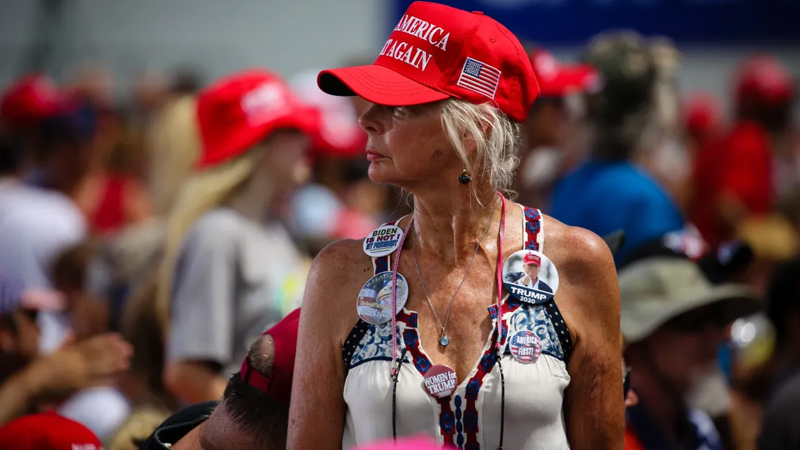
A new wave of infighting is rippling through pro-Trump social media circles after a series of viral posts reignited debate over the former president, the Jeffrey Epstein files, and U.S. foreign policy.
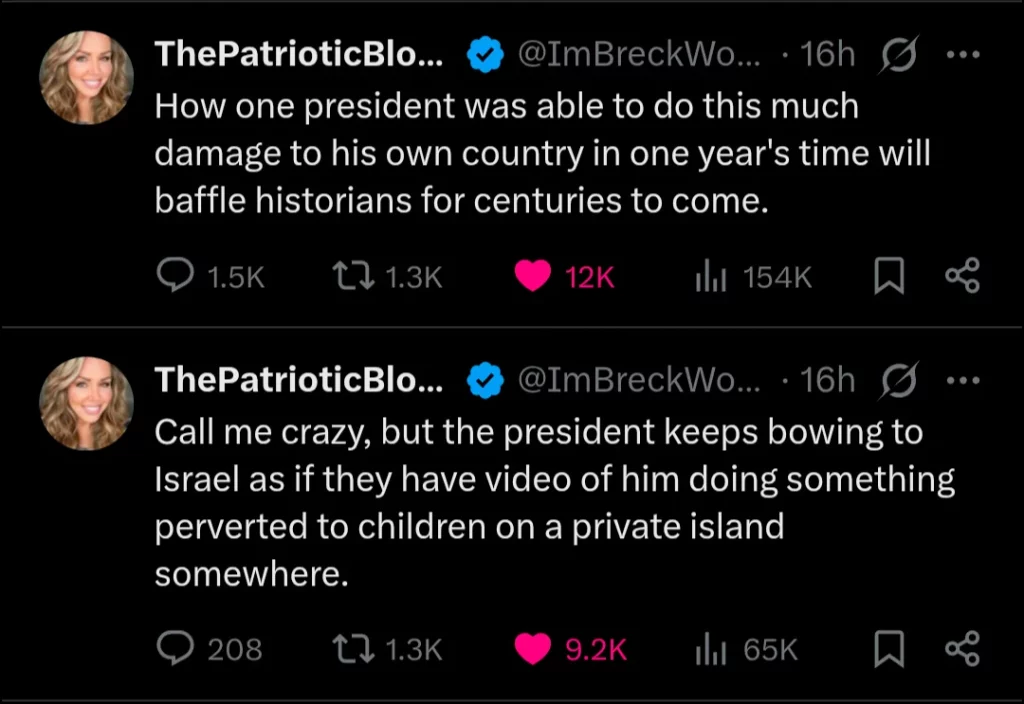
Screenshots circulating widely on X show a verified account critical of President Donald Trump arguing that the damage done to the country in a single year would “baffle historians.” In a second post, the same user suggested that the president’s approach toward Israel appeared unusually deferential, speculating that he could be vulnerable to leverage. The post included an extreme hypothetical involving blackmail. No evidence was provided to support the claim.
The posts quickly drew attention because they appear to come from within conservative online spaces rather than from long-time critics. Some users framed the comments as proof that even loyal supporters are starting to question Trump’s behavior. Others pushed back, calling the statements reckless and accusing the poster of spreading conspiracy theories.
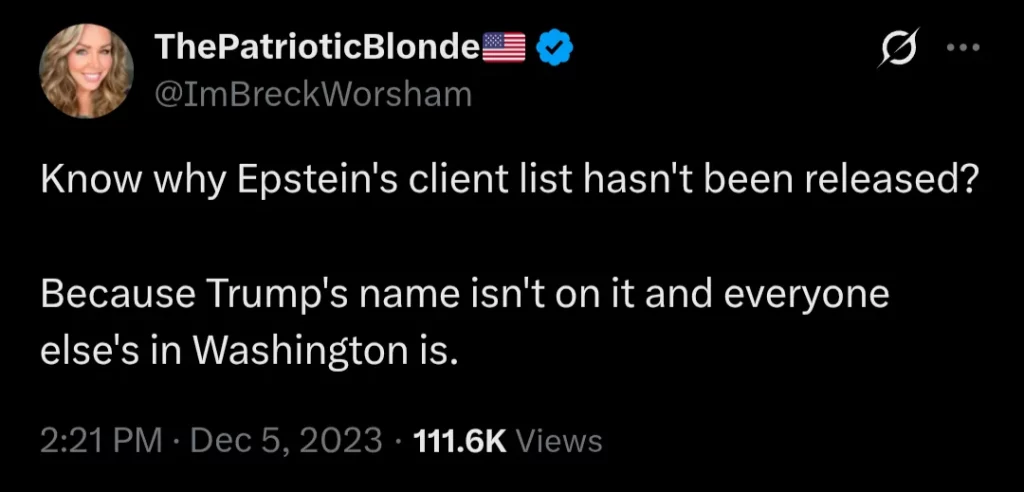
The controversy also revived discussion around the Epstein files. For years, Trump allies have argued that the former president’s name does not appear in any incriminating way in released court documents related to Jeffrey Epstein. However, the renewed chatter online shows some users now floating contradictory theories, including speculation that political figures could be compromised by undisclosed material. Again, there is no public evidence supporting these claims.
Political analysts say the episode highlights a growing pattern in online political culture: internal divisions are increasingly playing out in public, often fueled by emotional posts that blur the line between opinion and allegation.
“This is less about facts and more about frustration,” said one digital media researcher who studies political movements. “You’re seeing people who once felt unified around a candidate now expressing anger, confusion, and suspicion toward everyone, including their own leaders.”
As the 2026 midterm cycle begins to take shape, the episode underscores how volatile political discourse remains online and how quickly unverified claims can gain traction when they resonate emotionally with large audiences.